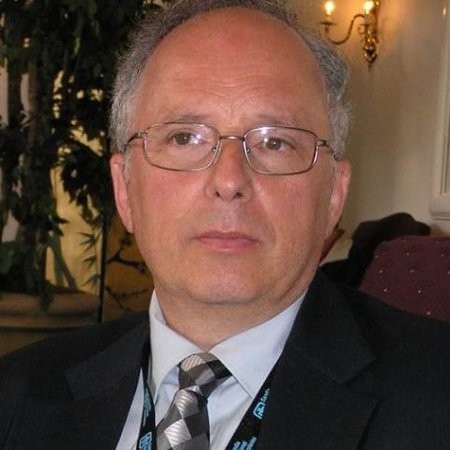
Dr. Joseph Kasser is an internationally recognized systems engineering thought leader whose career spans aerospace innovation, academic excellence, and transformative mentoring. His trajectory from NASA’s Apollo lunar missions to reshaping how systems engineering is taught reflects a lifelong commitment to developing exceptional problem-solvers through continuous improvement.
Mentoring as Core Philosophy (1980-Present)
Dr. Kasser’s 40+ year mentoring practice has consistently transformed competent practitioners into exceptional ones. At Loral Corporation, all four employees he mentored received awards for outstanding performance. He facilitated a nine-month certification course where eight of nine applicants passed all three elements on their first attempt, earning him the Institute of Certified Professional Managers’ Distinguished Service Award (1993). His students regularly upgrade term papers to peer-reviewed publications. A former NUS mentee became an Associate Professor at a European university immediately after receiving a PhD. Currently, he mentors professionals in Europe, India, Mexico and the UK, while facilitating an innovative online lifelong learning course running continuously since December 2020.
Career Evolution Through Learning
Industrial Excellence (1970-1997): Systems engineering for Apollo missions 15-17 (NASA Silver Snoopy Award); then led a $6.1 million solar power system delivered on schedule and within budget despite having no formal management experience. He later spent 15 years researching why his systems thinking approach succeeded when traditional metrics predicted failure; insights that now inform his teaching.
Academic Innovation (1997-2016): Created postgraduate programs at the University of Maryland and the University of South Australia focused on what working professionals need to know to do their jobs effectively. Course development prioritized practical application over academic theory, with continuous iterative updates based on student feedback and research findings. Developed the “balanced classroom” methodology and pioneered distance education techniques. Published course materials as peer-reviewed content, ensuring external validation while providing authoritative references. Earned NUS Innovative Teaching Award for the use of magic in the classroom (2008/2009) coupled with consistently superior student ratings.
Current Practice (2016-Present): Principal of The Right Requirement, developing courses based on gaps in practitioners’ capabilities rather than academic tradition. Continuously updates materials, incorporating feedback from mentees and the latest research into effective problem-solving. Experiments with innovative delivery methods, including AI-assisted analysis.
Recognition & Impact
- CEng (lapsed): UK and Singapore.
- Fellow: Institution of Engineering and Technology (IET), Institution of Engineers, Singapore (IES), and INCOSE.
- Author: 13 books, 100+ peer-reviewed publications.
- Educator: YouTube channel, podcast series, continuous online instruction.
- Innovator: Evidence-based approaches challenging conventional systems engineering wisdom.
Distinctive Approach
Dr. Kasser’s pedagogy centres on what practitioners need to know to solve real problems effectively. He identifies gaps between academic education and workplace requirements, then develops targeted courseware addressing those gaps. His iterative development process incorporates continuous feedback loops: student performance reveals what works, research validates approaches, and materials evolve accordingly. Rather than teaching fixed methodologies, he develops adaptable thinking skills. His goal: create practitioners who become mentors themselves, generating a multiplier effect across the field.
Awards include
- National University of Singapore, 2008-2009 Division of Engineering and Technology Management, Faculty of Engineering Innovative Teaching Award for use of magic in class to enrich the student experience.
- Best Paper, Systems Engineering Technical Processes track, at the 16th Annual Symposium of the INCOSE, 2006, and the 17th Annual Symposium of the INCOSE, 2007.
- United States Air Force (USAF) Office of Scientific Research Window on Science program visitor, 2004.
- Inaugural SEEC “Bust a Gut” Award, SEEC, 2004.
- Employee of the Year, SEEC, 2000.
- Distance Education Fellow, University System of Maryland, 1998-2000.
- Outstanding Paper Presentation, Systems Engineering Management track, at the 6th Annual Symposium of the INCOSE, 1996.
- Distinguished Service Award, Institute of Certified Professional Managers (ICPM), 1993.
- Manned Space Flight Awareness Award (Silver Snoopy) for quality and technical excellence, for performing and directing systems engineering, NASA, 1991.
- Goddard Space Flight Center Community Service Award, NASA, 1990.
- The E3 award for Excellence, Endurance and Effort, Radio Amateur Satellite Corporation (AMSAT), 1981, and three subsequent awards for outstanding performance.
- Letters of commendation and certificates of appreciation from employers and satisfied customers including the: Defence Materiel Organisation (Australia) , University of South Australia, Systems Engineering Society of Australia (SESA), United States Office of Personnel Management (OPM), University System of Maryland, Computer Sciences Corporation (CSC), Loral Corporation, Luz Industries, Communications Satellite Corporation (Comsat), American Society for Quality (ASQ), Association for Quality and Participation (AQP), the Wireless Institute of Australia, and the American Radio Relay League (ARRL).
Innovations
Innovations in education include
- Knowledge readings
- Kasser J.E., Introducing knowledge readings: Systems engineering the pedagogy for effective learning, proceedings of the APCOSEC, Yokohama, 2013. Overcoming the problem with the flipped classroom. The assumption that students will read the material before attending class is not valid. Knowledge readings require the students to read the material and present it in class, allowing the instructor to correct mistakes in interpretation in real time instead of waiting until the end of the semester.
- The balanced classroom
- The Evercourse lifelong learning model
Innovations in systems engineering include
- SE Certification
- Kasser J.E., The Certified Systems Engineer – It’s About Time!, proceedings of the Systems Engineering, Test and Evaluation Conference 2000 (SETE 2000) Brisbane, Australia, 2000
- The Digital Integrated Environment
- Kasser J.E., A Framework for Requirements Engineering in a Digital Integrated Environment (FREDIE), proceedings of the SETE 2000, Brisbane, Australia, 2000
- Eliminating text-mode requirements
- Kasser J.E. Does Object-Oriented System Engineering Eliminate the Need for Requirements?, proceedings of the 12th International Symposium of the INCOSE, Las Vegas, NV, 2002
- AI in SE tools – Fred -> Tiger Pro
- Kasser J.E., The First Requirements Elucidator Demonstration (FRED) Tool, Systems Engineering: The Journal of the International Council on Systems Engineering (INCOSE), Volume 7, Number 3, 2004
- The Hitchins-Kasser-Massie-Mabelo Framework (HKMF -> HKM2F)
- Kasser, J. E., The Hitchins-Kasser-Massie (HKM) Framework for Systems Engineering, proceedings of the 17th International Symposium of the INCOSE, San Diego, CA., 2007.
Innovations in project management include
- Transition via Transactions Kasser J.E., Transition via Transactions: First steps in creating a customer driven organization, proceedings of the First World Customer Service Congress, Tyson’s Corner, VA, 1997.
- Product-based planning in which each milestone had deliverables, the underlying principle of the PRINCE2 project management methodology
- The Systems Approach to Planning, 2015, https://www.youtube.com/watch?v=JNT4Rc7R8xg
- Shows how to build prevention into a project plan
- Incorporates risk management and other “specialty” activities into the project as opposed to add-ons in the current paradigm
- Improving monitoring of technical performance by using Categorized Requirements in Process (CRIP) charts, 2015, (STT Section 8.1) https://www.youtube.com/watch?v=5AUafacJ5AU
- Tracks the state of requirements from submitted through accepted, all the way to completed, as time goes by in a software or system development project
- Improving project status reporting with Enhanced Traffic Light (ETL) Charts, 2016, (STT Section 8.16.2) https://www.youtube.com/watch?v=fwM_9otO0F0
- Adds the time dimension and state of problems to project management reporting
Synergy
I mix my profession with my hobby and see many similarities between systems engineering and amateur radio. I am an active amateur radio operator. I received my first call sign G8BTB more than 50 years ago, and after upgrading to G3ZCZ also operated briefly as ON8IK, F0WN and W8/G3ZCZ, and then for many years as W3/G3ZCZ, 4X/G3ZCZ and VK5WU. I have a history of experimentation and innovation, including:
- Designing a hardware-based Self Operating Radioteletypwriter Contest Amateur Radio Station (SORCARS ) in 1972 and programmed it into LanLink years later. The QSO machine performed unassisted (but not unattended) in the 1990 ARRL RTTY contest, and did not come last in its section! This was the first and only legal automatic robot contest station in ARRL contests.
- Being one of the initial group of experimenters to receive a special permit from the US Federal Communications Commission to transmit and receive ASCII over the air when packet radio and other modern digital modes were not even a gleam in their experimenter’s eyes.
- Claiming the first OSCAR contact from a vehicle in motion when Art Feller, W4ART, and I communicated via AMSAT-OSCAR 6 while driving through Silver Spring in suburban Maryland which is about 10 miles up the road from the White House.
- Claiming the first remote computer-controlled station contest operation when I operated W4/G3ZCZ using VOIP via the Internet from VK5 in the ARRL 2001 SSB Sweepstakes contest.
- Adding Artificial Intelligence in the form of ‘Elmer’ (an Expert system) to my LanLink software in or around 1994. Elmer was based on a state machine and could hold limited conversations depending on its knowledge base. It was designed to be used via packet radio, however the widespread adoption of the Internet quickly made Elmer obsolete.
- Serving as AMSAT’s publications editor for more than 15 years, and over the years have authored three books on amateur radio, a number of articles in QST, 73, Ham Radio, RadCom, and other publications in the UK, US, and Australia. As well as writing and editing articles, I also write software for amateur radio, being the author of several programs including ‘Whats Up’, ‘CQ-SS’ and ‘LanLink which was flown on the space shuttle mission STS-35 and featured on a cover of QST. My latest software includes ZCZ Log for enhancing the FT8 experience and ZCZ Cluster for bragging about and checking DX contacts via the DXcluster.