-
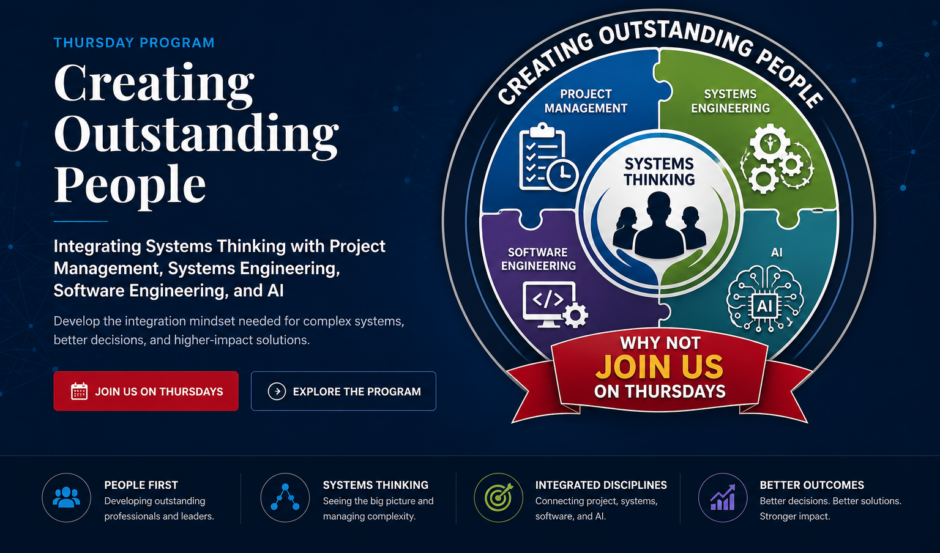
I'm normally on line Thursdays at 9.30 pm London local time and 7 pm New York local time in the OASIS café at Zoom Meeting (office hours for drop in chats)
-
Meeting ID: 873 4055 1993
Passcode: 557756 -
Link https://us02web.zoom.us/j/87340551993?pwd=dW5HdU1hNlpPWGNDeWQrT2F6bzR3Zz09
-
Podcasts on systems engineering and systems thinking -
NEW WEBINAR Overcoming the top three obstacles faced by young project managers in their first few years
From obstacles to triumphs
From obstacles to triumphs: A project manager’s early career roadmap
-
-
If you are even thinking about enrolling in training, you need to watch my YouTube video Why selecting the wrong training course could cost you $1000s
Blog Archives
Is your AI quality good enough to save humanity?
The AI team take a deep dive into Tom Gilb’s presentation to the BCS in July 2024 on AI quality which advocates for a multidimensional approach to evaluating AI systems, moving beyond vague descriptions. He argues that current AI models are defective due to inherent instability and a lack of transparency. Gilb proposes using quantifiable metrics for qualities like transparency and security, incorporating a stakeholder model for a more comprehensive understanding. The presentation emphasizes the need for measurable standards to assess AI systems effectively, contrasting Large … Continue reading
Comments Off on Is your AI quality good enough to save humanity?
Let’s just stop writing requirements
Our AI team takes a deep dive into a 2023 webinar presentation by Professor Joseph Kasser who argues that the traditional approach to writing system requirements is fundamentally flawed and proposes an alternative: Object-Oriented Systems Engineering (OOSE). OOSE replaces text-based requirements with object properties managed within an Integrated Information Environment (IIE), aiming to improve communication, reduce errors, and increase project success rates. The presentation details OOSE’s four-stage system development process and highlights its advantages over … Continue reading
Comments Off on Let’s just stop writing requirements
Luz: From Light to Darkness
The AI team take a deep dive into the case study on the successful system design process of the LuZ SEGS-1 solar power system’s control and electronics in 1981, using a modified Functions Requirements Answers and Test (FRAT) approach. The author, Joseph Kasser, uses the SEGS-1 project as a case study to illustrate how FRAT facilitates understanding the relationships between system functions, physical decomposition, and requirements. The paper presents several design choices and their rationales, … Continue reading
Comments Off on Luz: From Light to Darkness
Managerialism and Process Failure in the Old Aerospace Industry
The AI team takes a deep dive into an unpublished manuscript, written by an anonymous engineer, which presents a critical analysis of the “Formal Systems Engineering Process” (FSEP) prevalent in the older, large-scale aerospace and defense contracting industries. The author argues that FSEP, combined with an ideology called “Managerialism,” fosters an inefficient, top-down bureaucratic culture that stifles innovation and leads to high costs and reduced reliability. This system, characterized by excessive reliance on formal requirements, spreadsheets, micromanagement, and favoritism, is … Continue reading
Comments Off on Managerialism and Process Failure in the Old Aerospace Industry
Managing Successful Projects with PRINCE2®
The AI team takes a deep dive into the PeopleCert book Managing Successful Projects with PRINCE2 (2023) which serves as a comprehensive guide to the project management methodology. The content covers the seven PRINCE2 principles, such as “ensure continued business justification” and “focus on products,” and introduces the seven practices: Business Case, Organizing, Plans, Quality, Risk, Issues, and Progress, which describe essential project management aspects. Furthermore, the source details the project lifecycle processes, including (1) Starting up a project, … Continue reading
Comments Off on Managing Successful Projects with PRINCE2®